

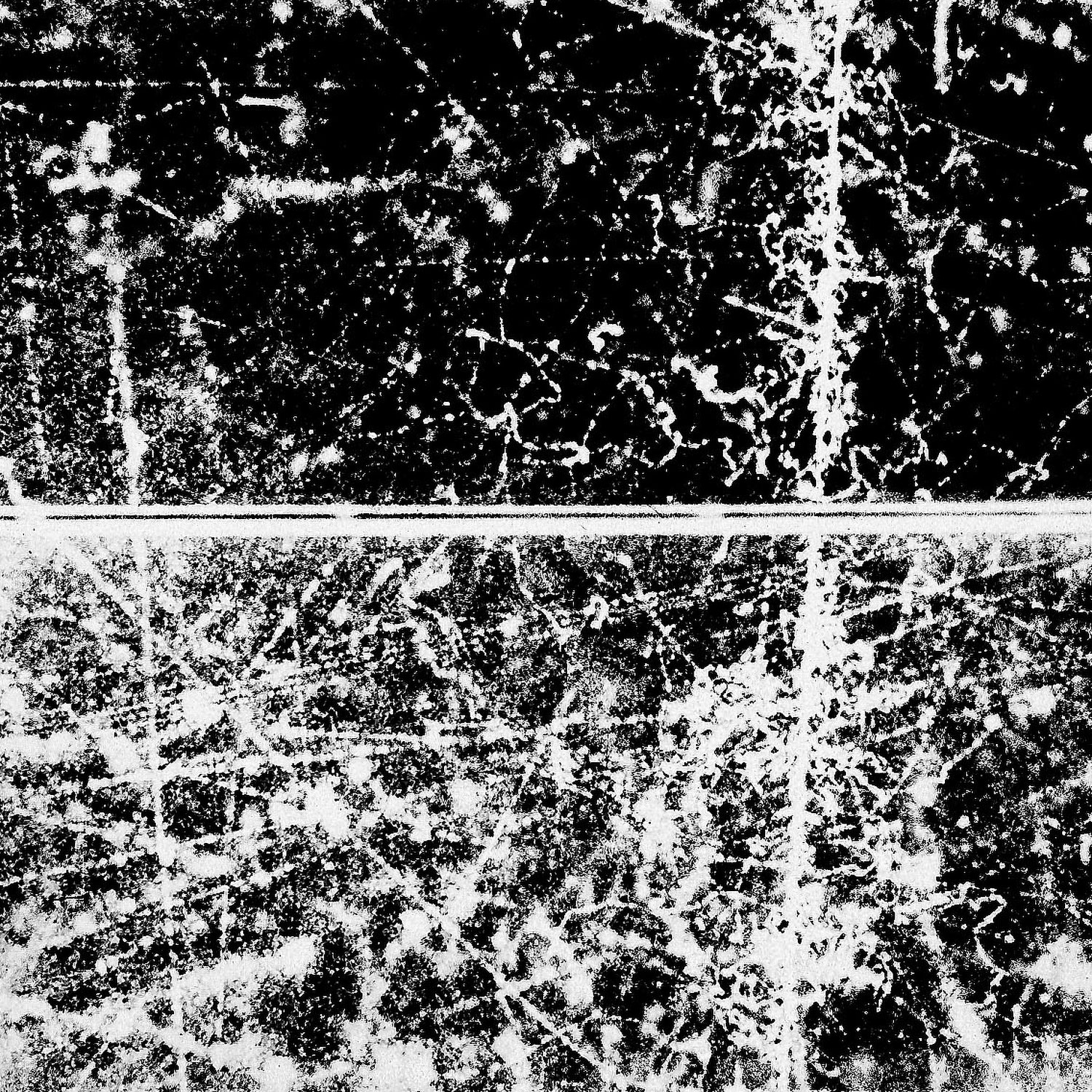
This is a 1960 photograph taken inside a cloud chamber, an instrument that reveals the presence of high-energy particles through tiny streaks of cloud. Its invention stemmed from one person’s fascination with a cloud effect seen in the Scottish mountains.
In 1894, Scottish physicist and meteorologist C T R Wilson observed a Brocken spectre, or glory, cast onto fog on Ben Nevis. Trying to recreate the effect in his laboratory, he experimented with making clouds inside a sealed box. In doing so, he discovered that supersaturated air could suddenly form fine trails of cloud when disturbed by high-energy particles.
Wilson showed that these particles ionised the air molecules in their wake, creating seeds onto which moisture condensed as tiny droplets. Different particles produced different tracks, allowing x-rays and subatomic particles such as electrons to be revealed for the first time.
For four decades, Wilson’s cloud chamber was one of the most important tools in particle physics, and versions are still used today. At CERN near Geneva, Switzerland, a modern cloud chamber is helping scientists investigate how cosmic rays from outer space may influence the formation of Earth’s natural clouds – the very clouds that first inspired Wilson’s experiments.
Cloud tracks photographed in 1960 in a cloud chamber attached to a balloon launched high into the atmosphere by physicist James A Earl. The vertical line to the right of the image was formed by a cosmic ray from outer space.