

Frederic Church Week: Friday
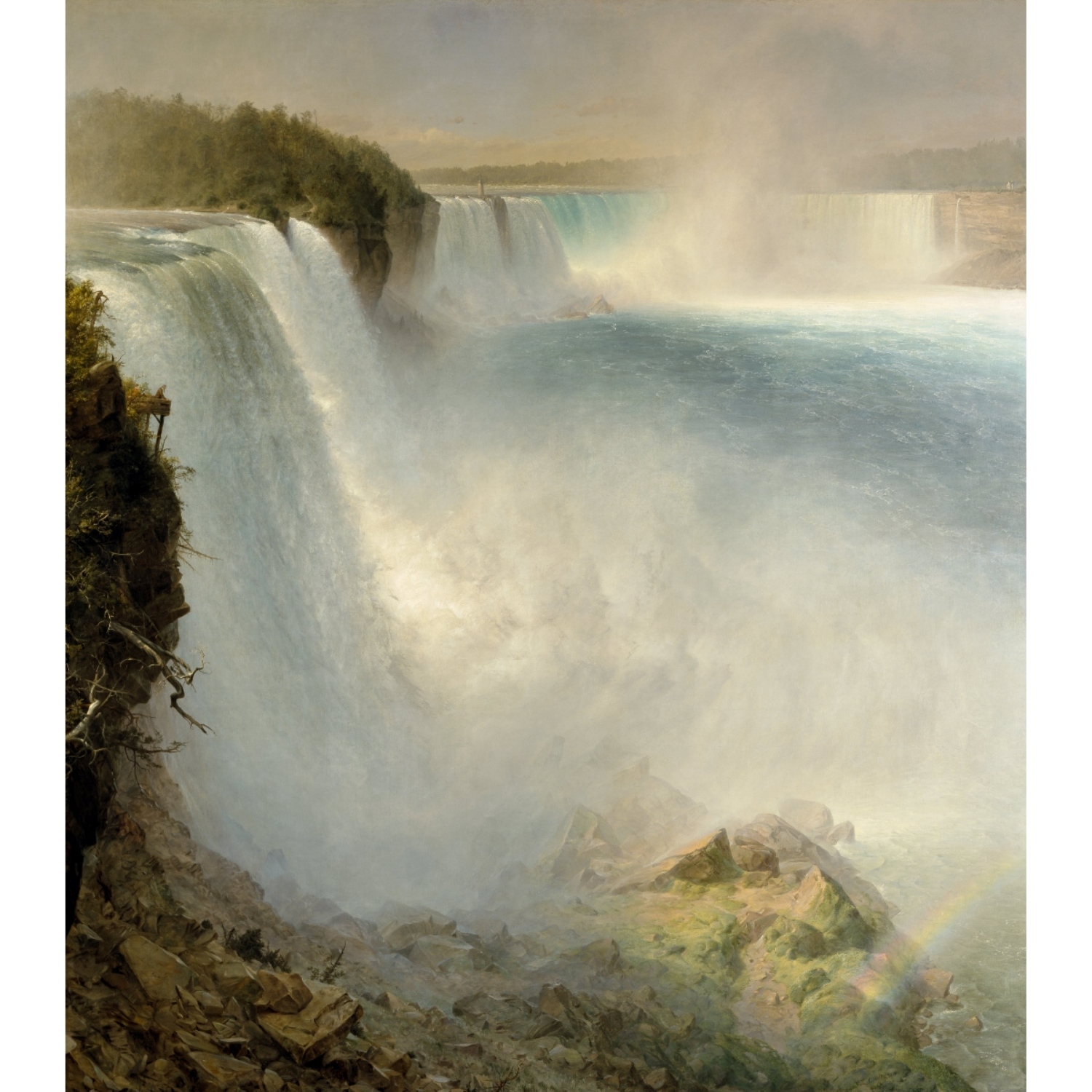
In this monumental 1867 painting by Frederic Church, his largest at around 2.5 x 2 m (8.5 x 7.5 ft), the artist captured the immense power of Niagara Falls, on the American-Canadian border. Ten years prior, he had created another large painting of the falls that had been a blockbuster sensation, helping to make Church the most famous American landscape painter of his generation. By the time he created this one, he was internationally famous for wowing audiences with the sublime drama of nature. And he always combined the artistic spectacle with close observations of atmospheric phenomena. As much as landscapes, Church painted the atmospheres they create.
Rising mist from falls like Niagara can appear as drifting veils of diffuse low cloud, known as Stratus fractus, which can have added to its name the term cataractagenitus, meaning ‘born of waterfalls’. These clouds appear when the force of the falls throws up so much spray that the air becomes saturated. The falling water also drags air down with it, creating a downdraft that splays out at the water surface below, lifting the air ahead of the falls. The cloud forms in this rising current of saturated air. Frederic Church’s swirling spray, shifting light, and faint rainbow all contribute to a scene that feels in constant motion.
Frederic Edwin Church, Niagara Falls, from the American Side, 1867, oil on canvas, 257.5 x 227.3 cm, Scottish National Gallery, presented by John S Kennedy 1887, NG 799.