

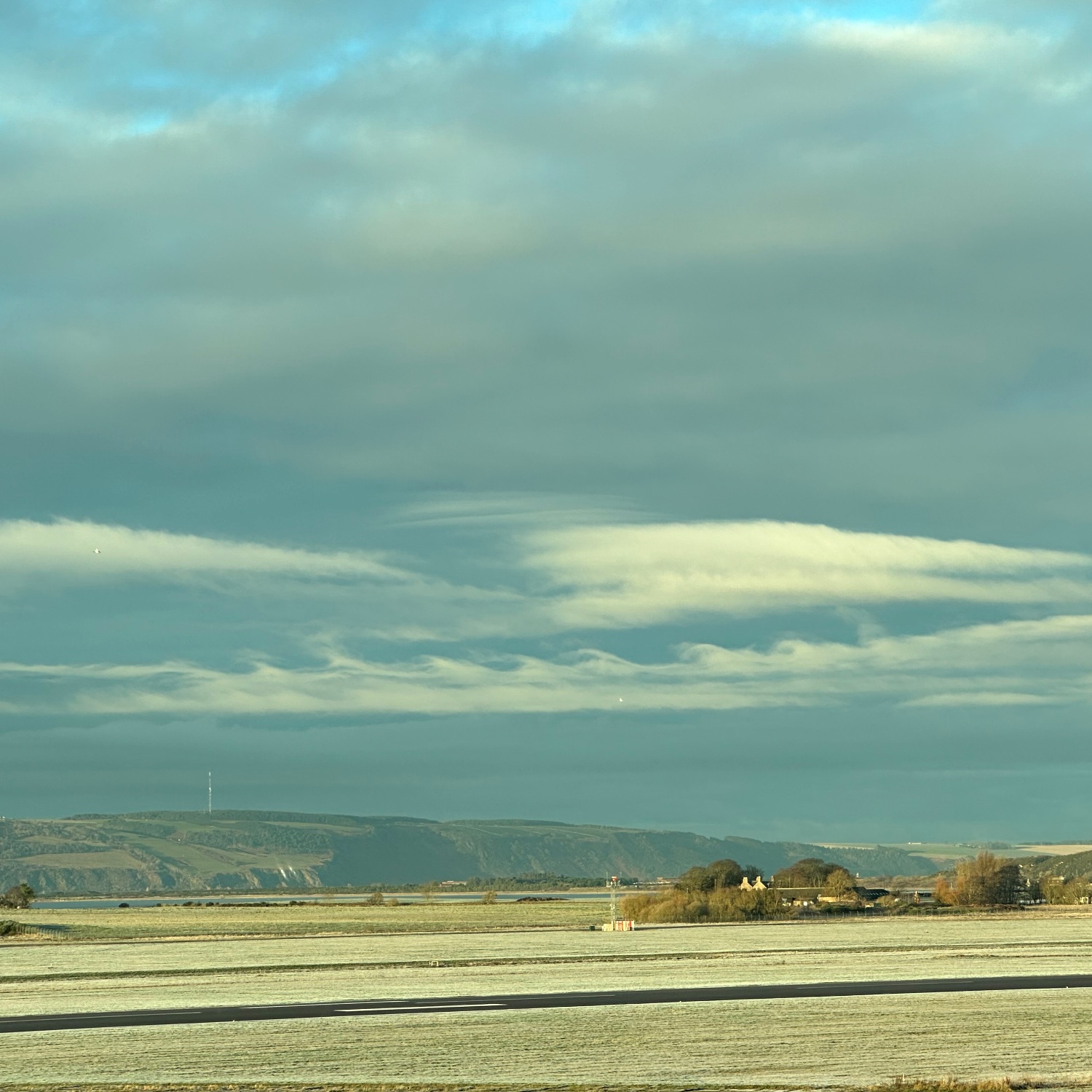
Geoff Burroughs (Member 54,114) was working at Inverness Airport in Scotland when he saw rare fluctus cloud features along the top of a distant patch of Altocumulus. Otherwise known as a Kelvin-Helmholtz wave cloud (a name taken from a couple of nineteenth-century scientists who studied fluid dynamics), fluctus can appear on cloud that forms at a boundary between layers of colder air below and warmer air above. If winds in the upper layer move considerably faster than those in the lower layer, the resulting wind shear where the cloud is between the two can cause undulations to develop. And if the shearing of the winds is just right, the tops of these undulations are curled over in a series of vortices that look just like breaking waves. ‘Before I was a Cloud Appreciation Society member,’ said Geoff, ‘I never would have looked out for cloud formations like this. But this group has taught me to keep my eyes to the sky.’
Saturday 28th March 2026
March 28, 2026